
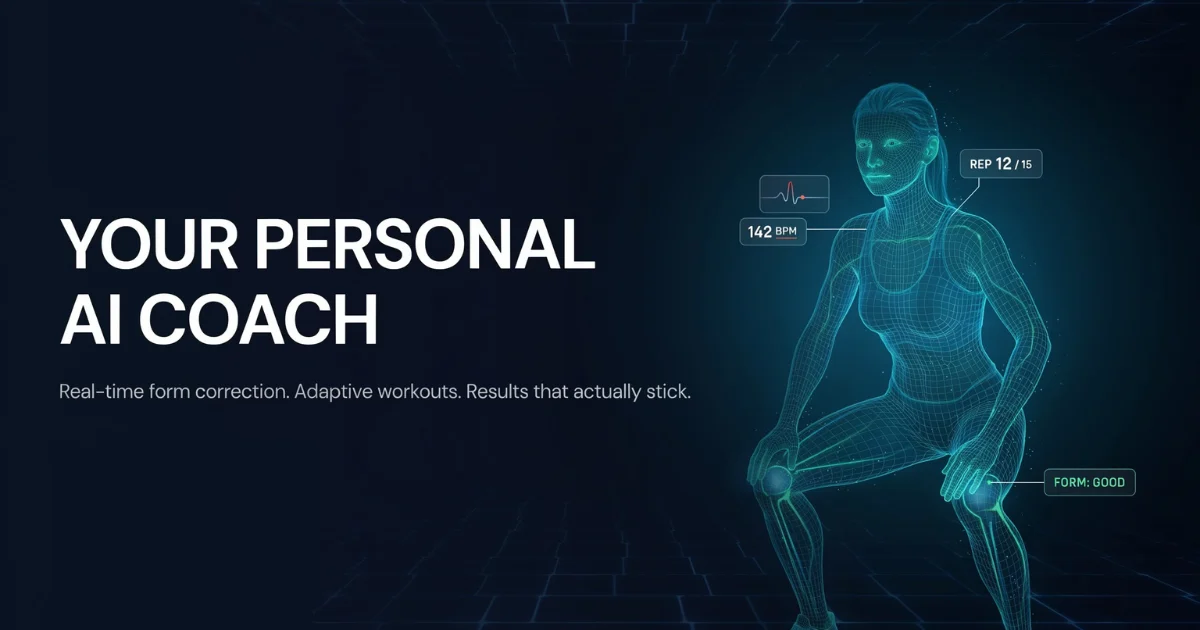
Fitness has quietly gone digital, and at the center of that shift is the AI fitness Coach a smart, always-available alternative to traditional gym coaching. Instead of relying on a fixed workout sheet, an AI fitness coach studies your performance, energy levels, and consistency to build a plan that actually fits your life. It brings personalized workouts without the cost of hiring someone in person, adjusting intensity as you improve or need recovery.
For busy people juggling irregular schedules, this kind of adaptive training removes the guesswork completely. Paired with real-time feedback and guided voice coaching, today’s AI fitness Coach feels less like an app and more like a dedicated training partner in your pocket.
What is an AI Personal Trainer?
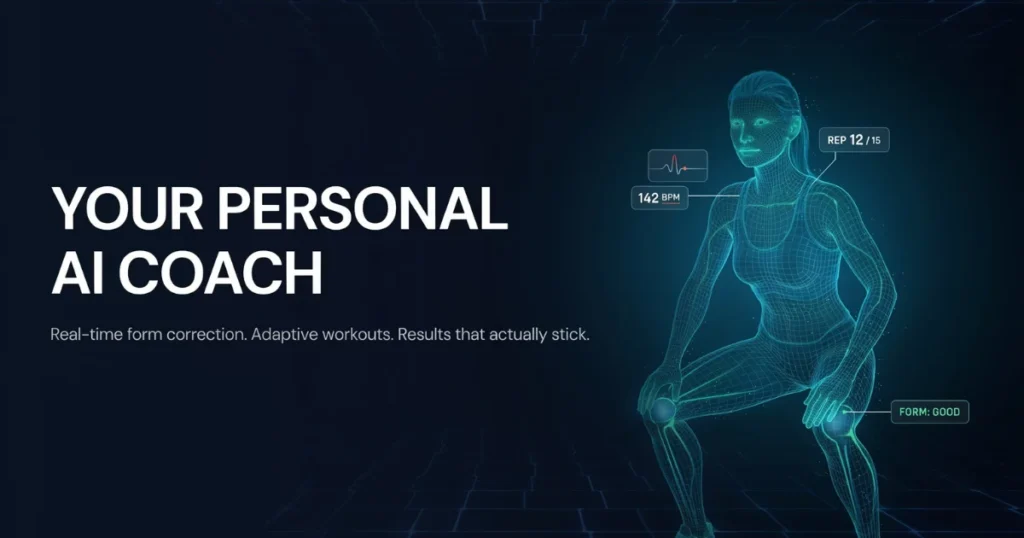
An AI personal trainer is a software-based coaching system that uses machine learning, motion tracking, and behavioral data to design and adjust your workout plan automatically much like a human coach would, but available 24/7.
Most AI personal trainers combine:
- Adaptive programming that changes based on your performance, recovery, and goals
- Real-time feedback on form, tempo, and rep count using your phone camera or wearable sensors
- Personalized training plans built from your fitness level, equipment, and schedule
- Progress tracking with data visualizations instead of guesswork
- Voice coaching that guides you through sets without needing to look at a screen
Unlike a static workout app that just lists exercises, a true AI personal trainer responds to you by tightening a program if you’re missing sessions, or increasing load if you’re recovering faster than expected.
Quick Comparison: Top AI Personal Trainers 2026
| App | Best For | Voice Coaching | Form Feedback | Price (Monthly) | Rating |
| Ray | Voice-first coaching & home workouts | ✅ Advanced | ✅ Yes | $12.99 | 4.7/5 |
| Freeletics | Bodyweight & HIIT | Limited | ❌ No | $14.99 | 4.4/5 |
| Fitbod | Strength training & gym programming | ❌ No | ❌ No | $12.99 | 4.5/5 |
| Future | Human + AI hybrid coaching | ✅ Basic | ✅ Yes | $199 | 4.6/5 |
| Zing Coach | Beginner-friendly plans | Limited | ✅ Yes | $9.99 | 4.3/5 |
Pricing and features vary by plan and region, always confirmed on the app’s official page before subscribing.
What Makes an AI Personal Trainer Worth Downloading?
Not every fitness app labeledAI-powered earns the title. A genuinely useful AI personal trainer should offer:
- True personalization plans that evolve with your data, not a generic template
- Actionable form correction, not just rep counting
- Recovery-aware programming that factors in sleep, soreness, and missed workouts
- Wearable integration with Apple Watch, Garmin, or Whoop
- Natural, low-friction coaching ideally hands-free, via voice coaching
- Transparent progress tracking with clear charts and milestones
If an app can’t explain why it changed your workout, it’s not really adapting, it’s just randomizing.
AI Personal Trainer vs Human Trainer Which is Better?
Both have a place, and the right choice depends on your budget, goals, and how much accountability you need.
| Factor | AI Personal Trainer | Human Trainer |
| Cost | $10–$25/month | $50–$150/session |
| Availability | 24/7, on demand | Scheduled sessions only |
| Personalization | Data-driven, continuously updated | Experience-driven, intuitive |
| Motivation & accountability | Moderate (improving with voice coaching) | High (in-person presence) |
| Form correction | Camera/sensor-based, improving rapidly | Immediate, hands-on |
| Best for | Home workouts, budget-conscious users, consistency | Injury recovery, competitive athletes, complex goals |
Bottom line: an AI personal trainer wins on cost, consistency, and convenience. A human trainer still wins when nuanced coaching cues or injury rehab are involved. Many users now combine both a human trainer occasionally, an AI personal trainer daily.
Our Top Picks for AI Personal Trainers
Ray-Best for Voice-Guided Coaching
Ray leads with voice coaching that feels closer to a real trainer standing next to you than a robotic countdown. It adjusts tempo, cues breathing, and calls out form corrections mid-set, which makes it especially strong for home workouts without a screen.
Fitbod Best for Strength Training
Fitbod shines for gym-based strength training, using your logged lifts to auto-adjust sets, reps, and weight progression over time.
Freeletics Best for Bodyweight & HIIT
A solid pick for equipment-free training, with AI-adjusted intensity based on your reported effort.
Future Best Hybrid Model
Future pairs a real human coach with AI-assisted programming, a premium option for people who want both structure and personal accountability.
Why Voice Coaching Makes the Difference
Screen-based cues force you to stop, look, and read, breaking your rhythm mid-workout. Voice coaching removes that friction entirely.
- You stay in position instead of glancing at a phone between reps
- Real-time verbal cues (“brace your core,” “slow the descent”) mimic real-time feedback from an actual coach
- It builds a more natural, motivating workout experience, similar to in-person cueing
- It supports better form under fatigue, when visual attention naturally drops
Apps like Ray treat voice as the primary interface, not an add-on which is why users often describe the experience as noticeably more “coached” than typical fitness apps.
AI Personal Training Effectiveness : What the Data Says
Fitness research consistently shows that consistency, not workout complexity, is the biggest driver of results. This is where AI personal trainers tend to outperform static plans:
- Adherence improves when programs adjust automatically instead of requiring users to redesign their own plan after a missed session
- Habit formation increases with daily prompts, streaks, and voice-guided sessions that lower the barrier to starting
- Injury risk drops when form feedback catches compensation patterns early, before they become chronic issues
No app replaces professional medical or physiotherapy guidance for existing injuries but for general fitness, strength building, and habit consistency, AI-guided coaching has closed much of the gap with traditional programming.
Real User Experiences: What Ray Users Say
Feedback from Ray’s user base tends to cluster around a few consistent themes:
- “It feels like someone’s actually coaching me” users frequently highlight the voice coaching as the standout difference versus other apps
- Better consistency many report sticking with workouts longer because sessions feel guided rather than self-directed
- Improved form confidence beginners in particular note feeling less unsure about technique during home workouts
As with any app, individual results vary based on effort, starting fitness level, and how closely the plan is followed. It’s worth checking current reviews on the App Store or Google Play for the most up-to-date user sentiment.
The Future of AI Fitness Coaching
Expect the next generation of AI personal trainers to lean further into:
- Multimodal coaching combining camera-based form analysis with voice and wearable biometrics
- Predictive programming adjusting workouts before fatigue or plateaus happen, not just after
- Deeper wearable integration using heart rate variability and sleep data to shape daily intensity
- More natural voice interaction coaching that responds conversationally, not just through pre-set scripts
The line between “app” and “coach” will keep blurring as fitness technology becomes more responsive and personalized.
Frequently Asked Questions
Is an AI personal trainer as good as a human 1trainer?
For general fitness and consistency, yes many AI personal trainers now rival human trainers. For injury rehab or advanced athletic goals, a human coach still adds unique value.
How much does an AI personal trainer cost?
Most apps range from $10 to $25 per month, significantly cheaper than in-person training, which typically costs $50–$150 per session.
Does voice coaching actually improve workouts?
Yes , it reduces screen-checking, keeps form cues timely, and creates a more natural, coached experience during home workouts.
Can AI personal trainers help with weight loss?
Yes, through personalized workout plans, consistency tracking, and often integrated nutrition guidance, though results depend on overall diet and activity level.
Conclusion
An AI personal trainer isn’t about replacing human expertise, it’s about making expert-level coaching available, affordable, and consistent. With features like voice coaching, adaptive programming, and real-time feedback, apps like Ray are closing the gap between app-based fitness and real coaching experiences.
If consistency has been your biggest fitness obstacle, an AI personal trainer might be the missing piece not a replacement for expertise, but a daily companion that keeps you showing up.