
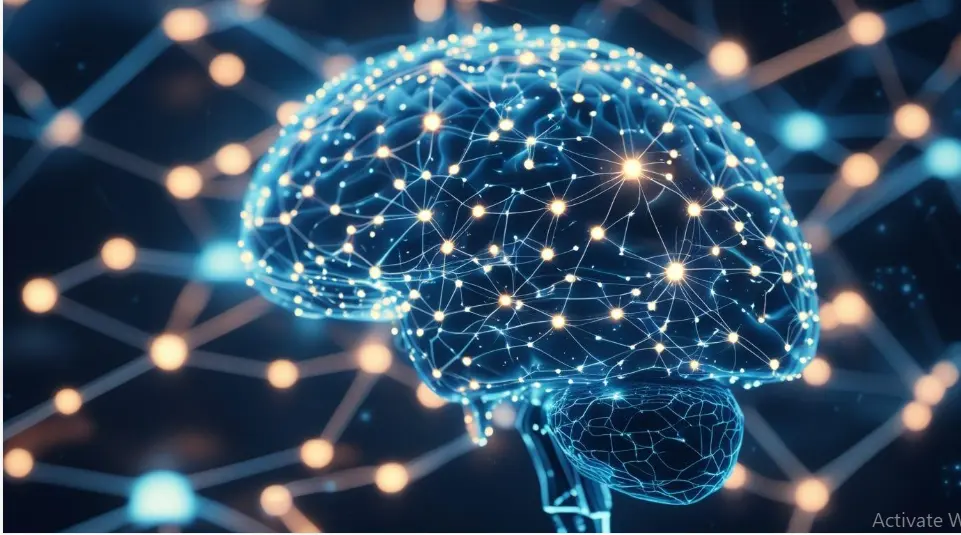
The purpose of artificial intelligence is to help computers perform tasks that usually require human abilities, such as learning from information, recognizing patterns, understanding language, making predictions, and solving problems. This guide explains what is the purpose of AI, how artificial intelligence works in computers, the main uses and advantages of AI, and the limitations readers should understand in 2026.
What Is the Purpose of AI? Understanding Its Role in Everyday Life
Introduction
Artificial intelligence (AI) has become an important part of modern technology. It helps power search engines, recommendation systems, translation tools, digital assistants, image recognition, and applications that generate text or other content. People may use AI every day without realizing how many different technologies are involved.
But why was AI developed in the first place? What problems is it supposed to solve, and how does it help people in practical situations?
The purpose of artificial intelligence is not simply to make machines appear intelligent. It is to build computer systems that can perform useful tasks, process information, support decisions, and automate selected activities. Depending on the application, AI may save time, improve consistency, identify patterns that are difficult to notice manually, or help people explore possible solutions.
In this article, we will explain AI in simple words, explore real-world examples, compare different types of AI, and discuss its advantages, limitations, and importance. We will also look at why AI has become so popular and what responsible AI use may look like in 2026.
What Is the Purpose of AI?
The main purpose of AI is to enable computer systems to perform specific tasks that normally require human-like abilities, including perception, language processing, learning, reasoning, and decision support.
AI systems can analyze information, recognize patterns, make predictions, recommend actions, or generate content. Their exact capabilities depend on how they are designed and trained. Some systems follow predefined rules, while others use machine learning models that identify patterns in data.
For example, an email service may use AI to identify likely spam messages. A navigation app may estimate travel times using traffic information. A writing assistant may help a user organize ideas into a clear outline. Each system has a different purpose, but all use computing techniques to address a particular task.
The purpose of AI can be understood through five broad goals:
- Automating repetitive tasks: Reduce the need for people to complete every routine step manually.
- Analyzing information: Process large amounts of data and identify potentially useful patterns.
- Supporting decisions: Provide predictions, recommendations, classifications, or summaries.
- Improving digital interaction: Help computers work with language, images, speech, and other forms of input.
- Supporting innovation: Help people explore new ideas, develop products, and solve complex problems.
AI is a tool, not an automatic replacement for human judgment. A system may produce a useful recommendation, but a person or organization still needs to decide whether that recommendation is appropriate.
What Is Artificial Intelligence in Simple Words?
In simple words, artificial intelligence is technology that enables computers to perform tasks associated with human intelligence.
A computer does not need to think or feel like a person to use AI. It can perform a task by following rules, applying a trained model, or processing information according to a particular objective.
Consider a photo application that groups pictures containing similar objects. The application analyzes visual features and uses those patterns to organize the images. It does not need human experiences or emotions to complete that task.
Similarly, an AI assistant can generate a response to a question by processing language and predicting an appropriate sequence of words. Its answer may be helpful, but it can also contain mistakes.
The best definition of artificial intelligence
There is no single definition that captures every AI technique. A practical definition is that artificial intelligence refers to computer-based systems designed to perform tasks such as learning, perception, language processing, prediction, problem-solving, and decision support.
The US National Institute of Standards and Technology (NIST) includes definitions of AI that cover systems capable of making predictions, recommendations, or decisions in environments. The United Nations also describes AI as a broad collection of technologies that can support human capabilities and perform different kinds of tasks.
These definitions highlight an important point: AI is not one specific application. It is a field that includes different approaches, tools, and systems designed for different objectives.
What Is Artificial Intelligence in a Computer?

Artificial intelligence in a computer refers to software, models, algorithms, and sometimes specialized hardware that enable a computer to perform an AI-related task.
A typical AI system may involve the following stages.
1. Collecting or receiving data
The system receives relevant information. Depending on the task, this could be text, pictures, audio, measurements, or records from a database.
For example, a system designed to classify customer messages receives text that needs to be organized into categories.
2. Processing information
The software processes the input in a form the model can use. The exact steps depend on the data and application.
An image-recognition system, for instance, processes visual information, while a language model processes text or other supported inputs.
3. Applying a model or set of rules
Some AI applications use predefined rules. Others use machine learning models trained on examples. A trained model applies learned patterns to new information to produce an output.
4. Producing a result
The system might return a prediction, label, recommendation, generated answer, or other result.
5. Checking the result
People can evaluate whether the output is accurate and useful. In high-impact applications, testing, monitoring, and human oversight are especially important.
Not every AI system learns continuously from its users. Many deployed models do not change their underlying parameters after each interaction. Their behavior may change only when developers update the model, its instructions, or its supporting data.
What Is the Purpose of AI in Everyday Life?

AI is useful because it can help people complete certain tasks more efficiently and work with information in new ways. Its value depends on whether it solves a real problem.
1. Education and learning
AI tools can explain unfamiliar concepts, generate practice questions, summarize study material, and help learners organize revision schedules.
For example, a student studying computer science might ask an AI assistant to explain the difference between a program and an algorithm. The student can then compare the answer with course materials and test their understanding through practice.
AI should support learning rather than replace it. Students still need to develop independent reasoning and follow their institution’s academic rules.
2. Healthcare and medical research
AI can assist qualified professionals with tasks such as analyzing medical images, organizing research data, and identifying patterns that may require further investigation.
A medical AI system might highlight an area of an image for a clinician to examine. That result is not automatically a diagnosis; appropriate clinical review remains necessary.
AI tools intended for general use should not replace professional medical advice or emergency care.
3. Business and productivity
Businesses can use AI to classify messages, summarize documents, analyze customer feedback, assist with inventory planning, and support routine administration.
For example, a small business may use an AI tool to create a first draft of a response to a frequently asked question. An employee can check the draft against company policy before sending it.
The goal is to support staff and improve a process, not simply to automate everything regardless of quality.
4. Transportation and navigation
Navigation systems can use data and predictive techniques to estimate journey times, identify traffic patterns, and recommend routes.
Some advanced transportation systems also use computer vision and other AI techniques to assist with driver-support features. These systems have different capabilities and limitations, so users must follow safety instructions and remain attentive where required.
5. Entertainment and recommendations
Streaming services, shopping platforms, and music applications may recommend content based on user activity, preferences, and patterns in available data.
Recommendations can make it easier to discover relevant material. However, they may also narrow what users see or reinforce existing preferences. Users should retain control over their choices instead of treating recommendations as objective judgments.
6. Accessibility and communication
Speech recognition, text-to-speech, translation, captioning, and image-description tools can help people interact with digital information in different ways.
These applications may be particularly useful for people who encounter barriers with conventional interfaces. Their performance can vary across languages, accents, disabilities, and real-world conditions, so accessibility testing matters.
What Are the Main Types of AI?
AI can be categorized by its capabilities, the methods it uses, or the tasks it performs. For beginners, it is useful to distinguish between common technical approaches and theoretical capability levels.
Machine learning
Machine learning is an approach in which a model learns patterns from data and applies those patterns to new examples. It can be used for classification, prediction, recommendations, and other tasks.
For instance, a system may learn from historical transactions to identify activity that appears unusual. An alert still requires appropriate interpretation because unusual activity is not necessarily fraudulent.
Deep learning
Deep learning is a type of machine learning that uses neural networks with multiple layers. It is used in many applications involving language, images, speech, and complex patterns.
Not every AI system uses deep learning, and not every machine learning method is based on neural networks.
Natural language processing
Natural language processing (NLP) helps computers work with human language. Applications include translation, speech transcription, text classification, summarization, and conversational assistants.
Computer vision
Computer vision enables systems to analyze images and video. Uses include recognizing objects, extracting text from documents, inspecting products, and organizing photos.
Generative AI
Generative AI produces content such as text, images, audio, video, or code based on learned patterns and user instructions. The output can be useful, but it may contain errors or reproduce problematic patterns from its training data.
Narrow AI and general AI
Narrow AI is designed for specific tasks or a limited range of tasks. Most practical AI applications in use today fall into this broad category.
Artificial general intelligence (AGI) refers to a proposed capability to perform a broad range of intellectual tasks at a level comparable to human intelligence. Its definition is debated, and it should not be confused with the specialized systems commonly available today.
These categories overlap. A single application may combine machine learning, deep learning, language processing, and generative AI.
What Are the Advantages of AI?
The advantages of AI depend on the task, the quality of the system, and the way people use it. When appropriately designed and monitored, AI can provide several benefits.
Faster processing of information
AI can process certain kinds of data more quickly than manual methods. This may help people sort documents, identify patterns, or summarize large collections of information.
Speed alone is not proof of quality. A fast system can still produce inaccurate results.
Automation of repetitive work
AI can assist with repetitive activities such as classifying requests, extracting information from forms, or drafting routine communications.
Automating suitable tasks may free people to focus on work requiring creativity, empathy, context, or complex judgment. Organizations should also consider how automation affects workers and how responsibilities may change.
Better pattern recognition
AI can help identify patterns in images, text, transactions, and other data. These patterns may support further investigation or help analysts prioritize their work.
Results depend on the training data, evaluation process, and environment in which the system operates.
Support for creativity and problem-solving
Generative AI can help people brainstorm, compare approaches, create outlines, and explore possible solutions. It can provide a starting point that people refine using their own knowledge and judgment.
More flexible digital services
AI-powered translation, speech recognition, and adaptive interfaces can make some digital services easier to use. Benefits vary depending on language support, accessibility, and the accuracy of the system.
What Are the Limitations and Risks of AI?

Understanding the purpose of AI also means understanding what can go wrong. AI does not guarantee accurate, fair, or safe results.
Inaccurate outputs
Generative AI can provide convincing but incorrect answers. Users should verify important facts with trustworthy sources, particularly when the information concerns health, law, finance, security, or other consequential decisions.
Bias and unfairness
AI models may reflect biases in their data, labels, design, or deployment. Poorly evaluated systems can produce unfair results, particularly when used to make decisions affecting people’s opportunities or access to services.
Privacy and security
Users may enter personal or confidential information into AI applications. Before uploading files or sensitive details, review the provider’s data practices, privacy settings, and terms.
Overreliance on automation
Relying on AI without checking its work can lead to errors and weaken independent skills. People should remain capable of evaluating results and recognizing when expert help is necessary.
Unequal access and social effects
AI benefits may not be distributed equally. Access to reliable internet, suitable devices, technical skills, and affordable tools differs across communities and countries. Automation can also change job tasks and skill requirements.
Responsible AI use therefore requires attention to accuracy, transparency, security, accountability, and the needs of people affected by the technology.
Why Is AI So Popular Now?
AI has existed for decades, but recent advances have made some applications easier to access and use. Several factors help explain its growing visibility.
First, modern computing hardware can support more demanding workloads. Second, large datasets and advances in machine learning have enabled new capabilities. Third, many AI tools now offer interfaces that let people interact with software using everyday language.
Generative AI has also made it easier for users to experiment with text, images, and other content without learning specialist software first. Businesses and educators are exploring how these tools fit into existing processes.
However, popularity does not mean that every AI product is reliable or useful. A widely discussed tool may still have limitations, and a demonstration may not reflect performance in everyday conditions.
In 2026, a practical way to assess new AI developments is to ask: What task does the tool perform? How well does it perform that task? What information does it use? What are its limitations? Is there evidence that it improves the outcome?
These questions are more useful than assuming that a product is valuable simply because it includes AI.
What Does Responsive AI Mean?
The phrase “responsive AI” can be used in different contexts, and it is not one universally standardized category of artificial intelligence.
In general usage, it may describe an AI system that responds to user inputs, adapts its output to a situation, or reacts to changing information. A conversational assistant that changes its answer based on a follow-up question is one example of responsive behavior.
However, responsiveness does not automatically mean that a system learns permanently, understands the world like a human, or produces correct answers. A system may respond quickly while still misunderstanding the user’s request.
When evaluating a product described as responsive AI, look at its actual features, the information it uses, whether it adapts during a session, and how it handles uncertainty and errors.
How to Use AI Responsibly in 2026
AI can be helpful when users choose the right task and evaluate the result carefully. The following habits can make everyday use more effective.
- Start with a clear goal. Decide whether you need a summary, explanation, translation, prediction, or another specific result.
- Provide suitable context. Give the system relevant details without sharing unnecessary personal or confidential information.
- Check the output. Verify factual claims, test generated code, and compare important recommendations with reliable sources.
- Protect privacy. Review the application’s settings and policies before uploading sensitive information.
- Use human judgment. Do not delegate high-impact decisions to an AI system without appropriate oversight.
- Keep learning. Understand the basics of the technology you use so you can recognize its limitations.
For students, responsible use means learning the material rather than submitting unverified AI-generated work. For professionals, it means following organizational policies and protecting confidential information. For businesses, it means evaluating systems before deployment and monitoring their performance over time.
Frequently Asked Questions
1. What is the purpose of AI in simple words?
The purpose of AI is to help computers perform useful tasks such as recognizing patterns, processing language, making predictions, and supporting decisions. It can automate selected work and help people analyze information.
2. What is artificial intelligence with examples?
Artificial intelligence is technology that enables computer systems to perform tasks associated with human abilities. Examples include spam filters, navigation recommendations, translation tools, image recognition, and generative AI assistants.
3. What are the main uses of AI?
Common uses include education, healthcare research, business productivity, transportation, content recommendations, accessibility, data analysis, and software development. The suitability of AI depends on the specific task and its risks.
4. What are the biggest advantages of AI?
AI can process information quickly, automate repetitive tasks, recognize patterns, assist with creative work, and support more flexible digital services. These benefits depend on the quality and implementation of the system.
5. What are the main types of AI?
Common technical areas include machine learning, deep learning, natural language processing, computer vision, and generative AI. AI can also be described by capability, such as narrow AI and the theoretical concept of artificial general intelligence.
6. Why is AI so popular now?
Improved computing, advances in machine learning, wider access to digital tools, and easy-to-use generative AI applications have helped make AI more visible. Its popularity does not guarantee accuracy or usefulness in every situation.
7. Does AI replace human intelligence?
AI can perform particular tasks associated with human abilities, but it does not automatically reproduce the full range of human understanding, experience, judgment, or responsibility. People remain important for evaluating outputs and making consequential decisions.
8. Is AI safe to use?
AI can be useful, but safety depends on the application and how it is used. Protect sensitive information, check important results, understand limitations, and seek qualified professional advice when appropriate.
Conclusion
The purpose of AI is to help computer systems perform useful tasks that involve learning, recognizing patterns, processing language, generating content, making predictions, or supporting decisions. Its applications range from everyday recommendations and accessibility tools to business analytics, scientific research, and specialized industrial systems.
Understanding AI means looking at both its advantages and its limitations. It can save time, support creativity, and help people work with information, but it can also produce errors, reflect bias, create privacy concerns, and affect how work is organized.
As AI develops through 2026, the most practical approach is to focus on real problems rather than hype. Learn what a tool does, check its results, protect your information, and keep human judgment involved where it matters. Used thoughtfully, AI can complement people’s skills and help them make more informed decisions.






One Comment