
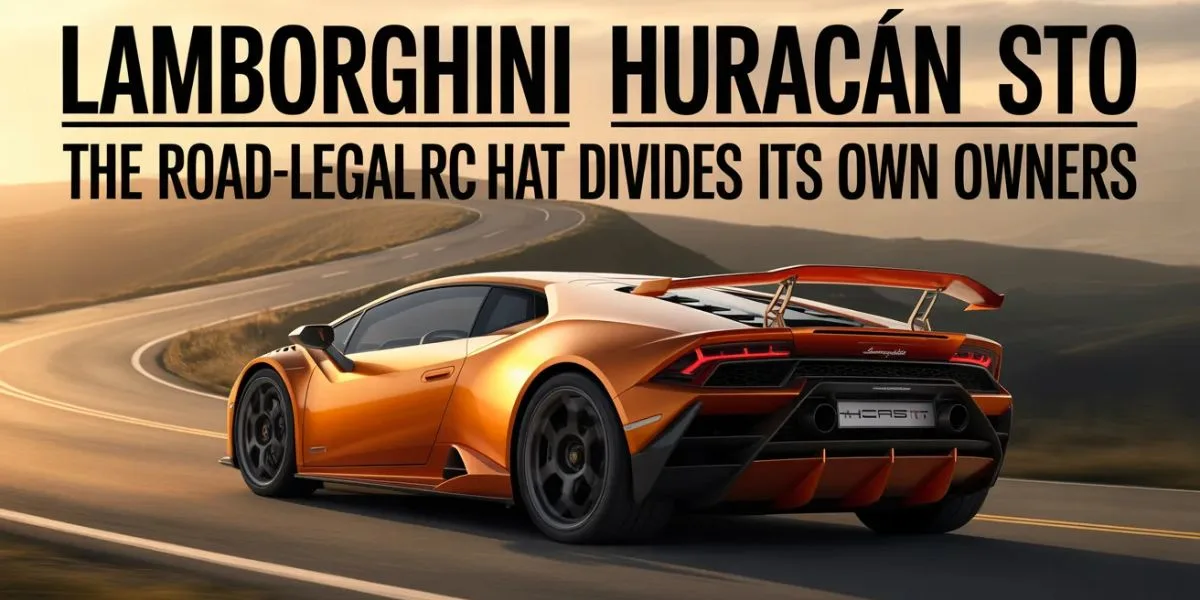
The Huracán STO is not a sports car with track aspirations. It’s a race car that Lamborghini reverse-engineered to pass road-legal certification and that distinction matters more than any spec sheet suggests.
If you’re cross-shopping it against the Porsche 911 GT3 RS, a used Ferrari 488 Pista, or even the McLaren 765LT, the numbers look close. The experience is not.
Here’s what most reviews and every single dealership page won’t tell you.
What Is the Lamborghini Huracán STO?
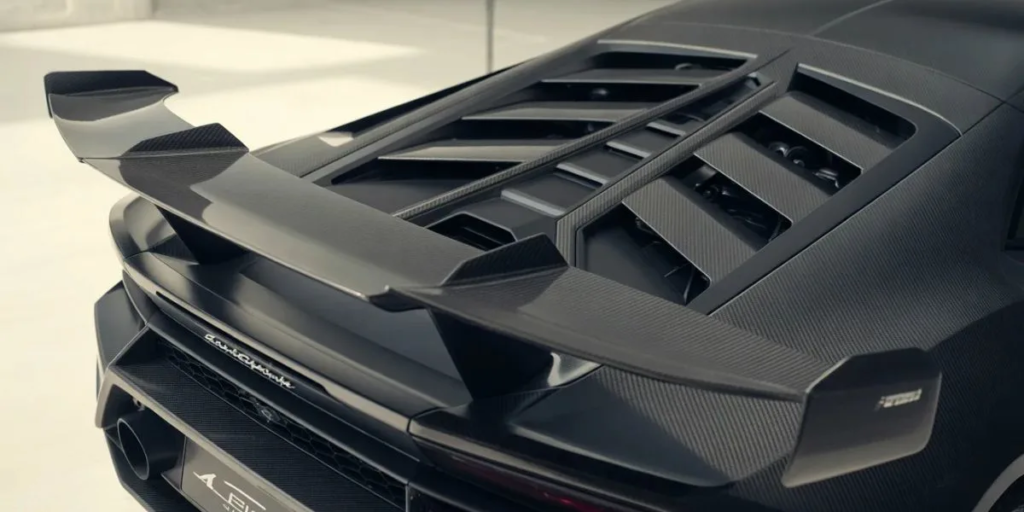
The Lamborghini Huracán STO (Super Trofeo Omologata) is a street-legal, rear-wheel-drive supercar built directly from Lamborghini’s GT3 and Super Trofeo racing programmes. It uses a naturally aspirated 5.2-litre V10 engine producing 630hp, sits on Bridgestone Potenza Sport tyres, and features carbon fibre across more than 75% of its exterior body panels.
The STO is the most extreme road-going Huracán ever made. Production ended in 2024, making every remaining unit either dealer stock or second-hand.
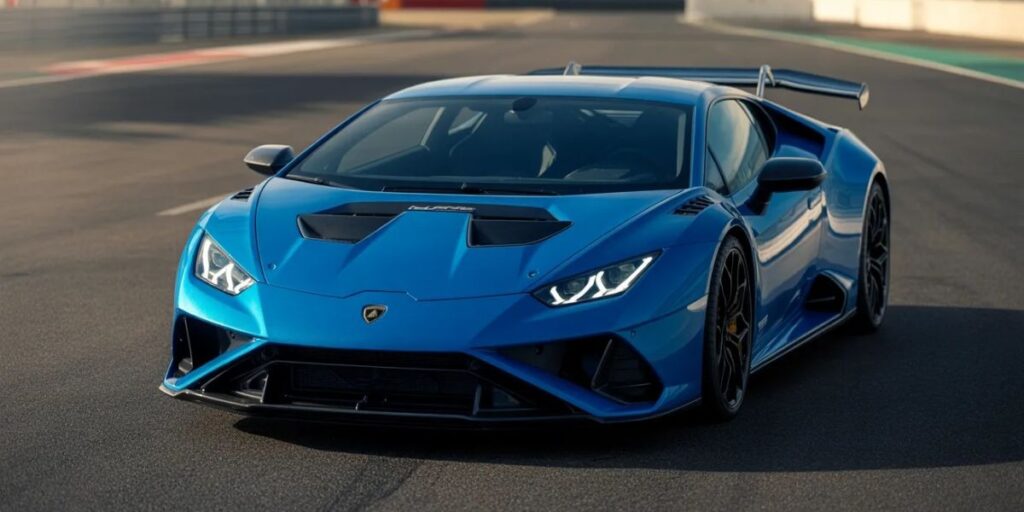
According to Lamborghini’s official product documentation, the STO achieves a 43 kg weight reduction over the already-stripped Huracán Performante accomplished through aerospace sandwich-construction carbon fibre, a windscreen 30% lighter than the Performante’s, new magnesium rims, and a titanium rear arch. That’s not marketing language. That’s a measurable engineering achievement.
The STO sits at the absolute top of the Huracán family hierarchy above the Tecnica, above the Performante, above everything.
Lamborghini Huracán STO Specs: What the Numbers Actually Mean
| Specification | Figure |
| Engine | 5.2L naturally aspirated V10 |
| Power output | 630 hp @ 8,000 rpm |
| Torque | 417 lb-ft |
| Drivetrain | Rear-wheel drive, 7-speed dual-clutch |
| 0–60 mph | ~3.0 seconds |
| Top speed | 193 mph |
| Dry weight | 2,952 lbs (1,339 kg) |
| Carbon fibre body coverage | 75%+ of exterior panels |
| Brakes | Brembo CCMR carbon-ceramic (F1-derived) |
The Brembo CCMR braking system is worth pausing on. CCMR discs carbon-ceramic with a metallic reinforcement layer are almost never found on road cars. They come directly from Formula 1 application. Lamborghini combined them with dedicated brake cooling ducts and a slightly lengthened pedal travel to give the STO a braking feel that owners consistently describe as confidence-inspiring in a way that pure carbon-carbon systems are not at cold temperatures.
That’s what separates STO-spec hardware from most track-day cars at any price.
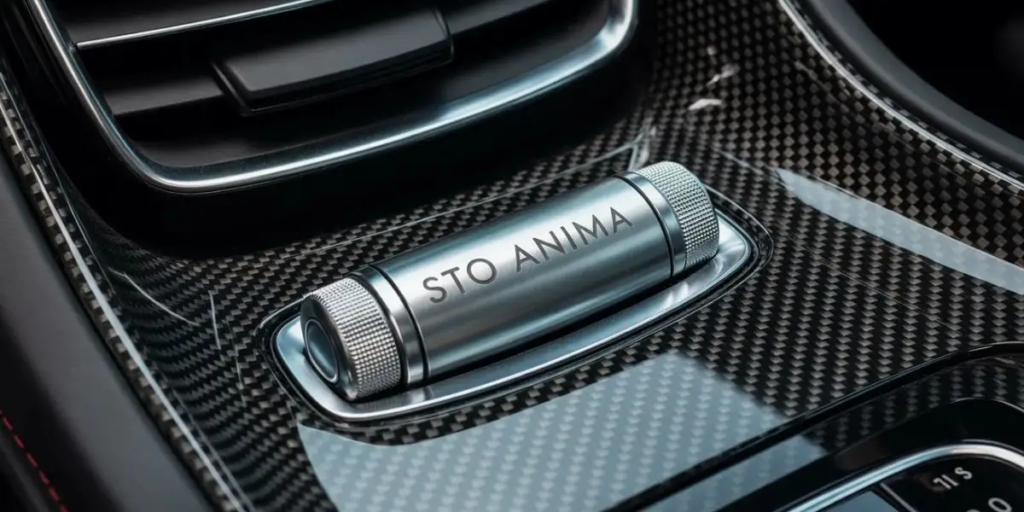
Three ANIMA driving modes STO, Trofeo, and Pioggia control throttle mapping, stability intervention, and suspension stiffness. Trofeo mode is genuinely savage on anything other than glass-smooth tarmac. Most owners daily-drive in STO mode.
Quick note: the 630hp figure you’ll see on most spec sheets is rounded down from the official 640 CV (metric horsepower). At 8,000 rpm on a cold morning, none of this matters the engine is intoxicating regardless of which unit you use.
Lamborghini Huracán STO Price: What You Actually Pay
The base MSRP at launch was $327,838. Nobody paid that.
Real transaction prices for 2022–2024 models ran $380,000 to $420,000 once options, dealer premiums, and taxes were applied, according to data aggregated by CarConciergePro (2025). Used examples with low mileage and rare liveries have traded at or above original MSRP particularly 2024 models, which were the final production year and had all build slots sold out by early 2023.
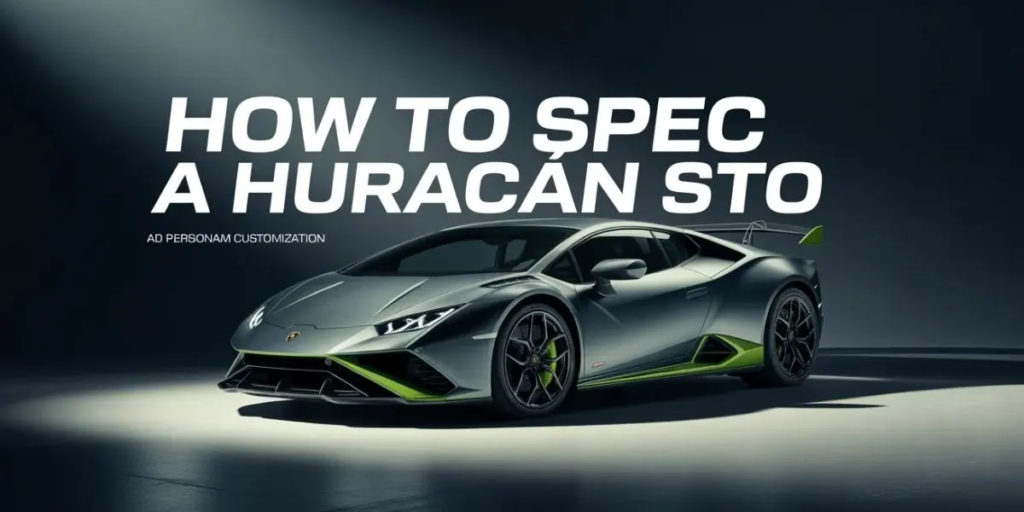
The Lamborghini Ad Personam programme is the single biggest driver of price variance. Buyers can spec bespoke paint (including matte finishes and racing liveries), custom interior stitching, and one-off colour combinations. A well-optioned STO with the SC (Squadra Corse) Pack which bundles the Lamborghini Connected Telemetry system, magnesium rims, and a fire extinguisher will clear $400,000 without much effort.
The SC Pack is the one option most serious track users want. The telemetry system records and saves lap data, tyre temperature curves, and G-force profiles.
Or maybe I should say it this way: if you’re buying an STO without the SC Pack, you’re leaving the most useful part of the car on the options list.
Street Livability: The Honest Verdict Nobody Else Will Give You
Here’s the thing: the STO divides its own buyers more sharply than almost any supercar at this price point.
The dealership pages you’ve already read describe a “track-honed experience you can drive to the mall.” That’s technically true. It is also deeply misleading.
Owners on Rennlist a forum dominated by Porsche GT car buyers, many of whom cross-shopped the STO directly have been blunt: the setup creates a harshness on normal roads that a meaningful number of buyers found genuinely difficult to live with. Several long-term Huracán owners, people who weren’t impulsive flippers, sold their STOs within the first year. The Tecnica, which softened the STO’s approach considerably, is widely considered the better daily-usable choice among that community.
That’s not a knock on the STO. That’s useful information.
The PistonHeads road test (2026) put it well the STO “feels like an old Lotus.” You never find a truly comfortable driving position. The rear visibility through the vented engine cover is essentially non-existent. The door cards are a sheet of carbon with a rope pull. The Bridgestone Potenza Sports need warmth before they work properly.
Start it up anyway. The V10 at idle, with cylinder deactivation running, produces a five-cylinder warble like a straight-piped Audi. Open the valves past 4,750 rpm with all ten cylinders firing and it becomes something else entirely.
Look if you’re buying this car primarily for road driving, with occasional track days, the Tecnica is probably the more rational choice. If you’re buying it specifically because you want the most extreme analogue V10 experience available before electrification makes that impossible, the STO is irreplaceable.
I’ve seen conflicting data on resale some sources suggest STO values have softened as the Revuelto arrives and shifts attention to the new generation, while collector-focused analysts argue limited production and the NA V10’s cultural cachet will sustain premiums long-term. My read is that low-mileage, rare-livery examples hold value; high-mileage track cars depreciate like any used race car.
Huracán STO vs Porsche 911 GT3 RS: The Real Comparison
Quick Comparison
| Lamborghini Huracán STO | Porsche 911 GT3 RS (992) | |
| Best for | Maximum emotional engagement, V10 soundtrack | Ergonomic daily usability + track precision |
| Engine | 5.2L NA V10, 630hp, RWD | 4.0L NA flat-six, 518hp, RWD |
| 0–60 mph | ~3.0 sec | ~3.2 sec |
| Starting price | ~$330,000 | ~$241,300 |
| Street comfort | Harsh — requires smooth roads | More compliant, more liveable |
| Track lap times | Faster (per FastestLaps data) | Marginally slower at most circuits |
| Resale dynamic | Final production year — limited supply | Strong Porsche GT allocation premium |
| Limitation | Compromised street experience | Less visceral, less dramatic |
The STO is faster around most circuits FastestLaps.com data puts it ahead of the 992 GT3 RS by a meaningful margin across multiple track comparisons. Faster doesn’t mean better for everyone.
Some reviewers argue the GT3 RS is simply the more complete car ergonomically superior, easier to live with, and barely slower. That’s valid. For someone who tracks a car six times a year and also commutes in it, the Porsche argument is hard to dismiss.
But the STO is not trying to be the GT3 RS. It’s trying to be the Super Trofeo EVO with number plates. If that’s the brief you’re buying into, it succeeds completely.
Huracán STO vs GT3 RS a direct summary: The STO is better suited for buyers who prioritise maximum track performance and want the most emotional NA supercar available, because its V10, aero package, and Brembo CCMR hardware are genuinely without equivalent at the price. The GT3 RS works better when usability and ergonomic refinement matter it’s faster to get comfortable in, easier to push to the limit on a cold day, and more forgiving on imperfect roads. The key difference is that the STO rewards commitment; the Porsche rewards consistency.
What Most Guides Skip About Buying a Used STO
Most people assume buying a used STO is straightforward if you have the budget. The data says otherwise.
The 2024 model year is the final production run. Certified Pre-Owned availability through official Lamborghini dealers provides warranty coverage and documented service history, which matters enormously on a car this complex. Private sales of track-used STOs require independent inspection of the Brembo CCMR brakes (expensive to replace), the carbon fibre body panels (very expensive to replace), and the suspension geometry (which shifts on track-intensive cars).
What most guides skip: the STO has no spare tyre, no rear seats, and minimal storage. It’s designed around a helmet bag and a timing transponder. Buyers who approach it expecting supercar practicality routinely describe the experience as exhausting within weeks.
The Travel Package which adds a cupholder, ashtray, and 12V socket exists for a reason. It’s not a joke option. People order it.
Voice Search Q&A
What’s the 0-60 time of the Lamborghini Huracán STO?
The Huracán STO reaches 60 mph from rest in approximately 3.0 seconds, powered by a naturally aspirated 5.2-litre V10 producing 630hp and driving the rear wheels only.
How much does the Lamborghini Huracán STO cost?
The base MSRP was $327,838, but real transaction prices typically landed between $380,000 and $420,000 after options, dealer premiums, and taxes. Used examples with rare configurations can exceed that.
Should I buy the Huracán STO or the Porsche 911 GT3 RS?
Buy the STO if you want maximum track performance and the most emotional V10 experience available. Choose the GT3 RS if you prioritise daily usability, ergonomics, and a lower entry price it’s only marginally slower on most circuits.
Why does the Lamborghini STO have such a harsh ride?
The STO’s suspension and tyres are tuned primarily for track use. Trofeo mode in particular is extremely stiff. Most owners use STO mode on public roads, but the car is genuinely uncompromising compared to road-focused supercars at the same price.
When should I consider the Huracán Tecnica instead of the STO?
If you plan to drive it more than 5,000 miles per year on public roads, or if you want a car that doesn’t require warm tyres before it feels safe, the Tecnica offers nearly identical performance with meaningfully better street manners.