
Boston tech news in 2026 highlights a technology ecosystem shaped by artificial intelligence, robotics, biotechnology, cybersecurity, and ambitious startups. This guide explores seven important Boston technology trends, the role of universities and research institutions, startup funding opportunities, and the challenges founders face. It also explains how businesses, students, and technology professionals can follow reliable Boston technology news and identify developments worth watching.
Boston Tech News: 7 Major Trends Shaping the Startup Scene in 2026
Boston has long been associated with universities, scientific research, healthcare innovation, and technology entrepreneurship. In 2026, these strengths continue to influence the region’s startup ecosystem. From AI-powered software to advanced robotics and biotechnology, local companies are developing solutions for complex problems across multiple industries.
For readers following Boston tech news, the most interesting developments are not limited to new apps or consumer gadgets. Many companies are working on technologies that connect software with the physical world, improve scientific research, strengthen digital security, and transform business operations.
This article examines seven technology and startup trends shaping the Boston area in 2026. It also looks at what these developments mean for entrepreneurs, investors, students, job seekers, and established businesses.
Why Boston Is an Important Technology Hub
Boston benefits from a combination of academic research, specialized talent, healthcare institutions, investors, and technology companies. Nearby Cambridge adds another important layer to the region’s innovation network.
Institutions such as MIT and Harvard contribute to a research environment where scientific discoveries can inspire commercial products. Researchers and graduates may join established companies, create startups, or collaborate with industry partners to bring new ideas to market.
The wider region also has strengths in life sciences, healthcare technology, robotics, enterprise software, and cybersecurity. These fields often require expertise beyond general software development, including scientific knowledge, hardware engineering, regulatory understanding, and access to specialist data.
This environment creates opportunities for companies working on technically demanding problems. However, strong research institutions do not guarantee that every startup will succeed. Founders still need customers, sustainable business models, effective teams, and sufficient funding.
1. Artificial Intelligence Is Changing Boston Startups

Artificial intelligence is one of the most important themes in Boston tech news in 2026. Local startups are using AI to build products, automate workflows, analyze complex information, and create new businesses.
AI is also changing how startups are built. In a May 2026 report, The Boston Globe described how local founders were using AI tools to develop products and operate businesses with smaller teams. The report also highlighted growing interest in AI-focused entrepreneurship during Boston Tech Week.
This shift can lower some barriers to experimentation. Founders may be able to create prototypes faster, test product ideas, and automate routine tasks without building every component from scratch.
Where AI Is Creating Opportunities
Boston AI startups work across several areas, including healthcare, enterprise software, financial services, cybersecurity, and scientific research.
For example, AI tools may help businesses summarize documents, process customer requests, detect patterns in large datasets, or support software development. In scientific environments, machine learning can help researchers analyze information that would otherwise require extensive manual work.
AI can also support customer service, sales operations, and internal administration. However, companies must consider accuracy, privacy, reliability, and human oversight before deploying these systems in important workflows.
What Businesses Should Watch
The next stage of AI adoption is not simply about adding a chatbot to a website. Businesses increasingly need to understand how AI integrates with existing systems and whether it produces measurable results.
Important questions include:
- Does the tool solve a real business problem?
- Can its outputs be checked for accuracy?
- How is confidential information protected?
- What happens when the system makes a mistake?
- Does the solution reduce costs or improve productivity?
For startup founders, the opportunity is to develop practical products that solve specific problems rather than relying on AI as a marketing label.
2. Robotics and Physical AI Are Gaining Attention
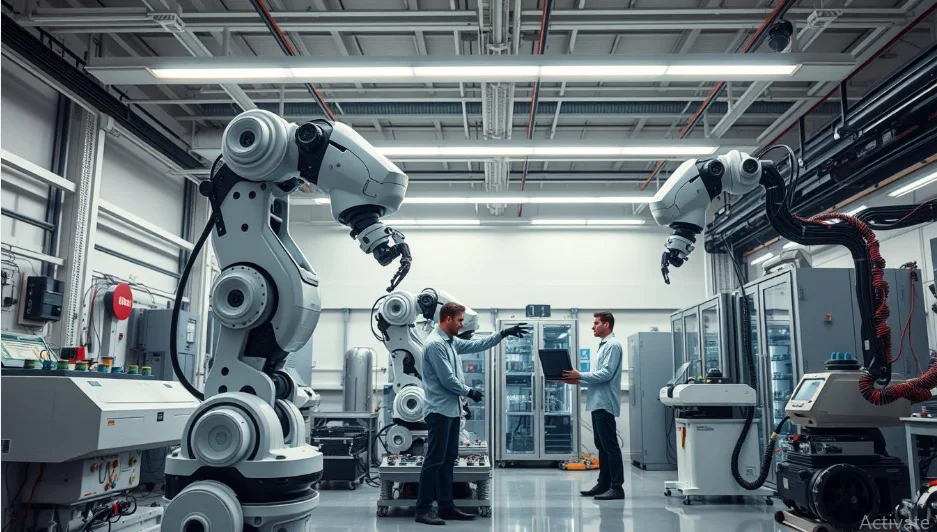
Robotics is another significant trend in Boston’s technology ecosystem. Unlike software that operates entirely on a screen, robotics combines AI with machines that interact with real environments.
Applications include manufacturing, logistics, warehouse operations, healthcare, laboratory automation, and industrial inspection. Companies developing these systems must solve difficult challenges involving movement, perception, safety, hardware, and reliable operation.
Boston’s Robotics Advantage
The Boston and Cambridge area has a strong research environment for robotics, engineering, and artificial intelligence. This gives startups access to technical expertise and potential research collaborations.
A notable development reported by The Boston Globe in July 2026 was the announcement of a $300 million funding round for Cambridge-based Walden Robotics, a company developing AI-powered robots for factory and warehouse work. The report connected the company to the Toyota Research Institute and research associated with MIT.
This example illustrates the level of investment that advanced robotics can attract. It should not be taken as evidence that every robotics startup has access to similar funding.
Why Physical AI Matters
Physical AI aims to help machines understand their surroundings and perform tasks in the real world. In industrial settings, this could support repetitive work, material handling, or tasks that are difficult to automate using conventional programming alone.
However, deploying robots requires careful testing. A machine must operate safely around people, respond appropriately to unexpected situations, and deliver enough value to justify its cost.
For businesses evaluating robotics, the important measures include reliability, maintenance requirements, safety, integration costs, and the time needed to recover the investment.
3. Biotechnology and Healthcare Technology Remain Key Strengths
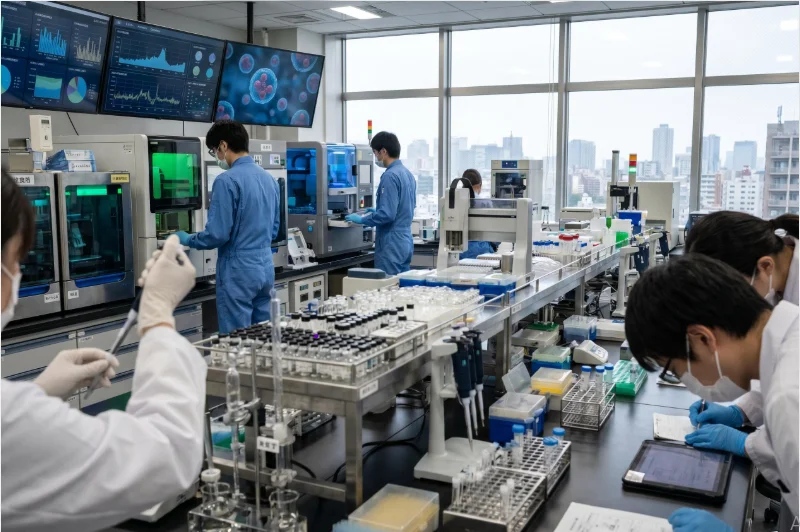
Boston is widely recognized for its life sciences and healthcare ecosystem. The region’s universities, hospitals, laboratories, and biotechnology companies provide a foundation for research-driven innovation.
Biotechnology startups work on areas such as drug discovery, diagnostics, medical devices, laboratory tools, and treatments for complex diseases. Healthcare technology companies may also develop software for clinical workflows, patient engagement, data analysis, and administrative operations.
How AI Is Supporting Life Sciences
AI can help researchers analyze biological datasets, identify patterns, prioritize experiments, and explore possible drug candidates. These applications may speed up parts of the research process, but they do not remove the need for laboratory validation, clinical evidence, or regulatory review.
Healthcare software also has to meet high standards for privacy, safety, and reliability. A tool that works well in a demonstration may require substantial testing before it is appropriate for real clinical use.
Opportunities for Startups
The combination of scientific expertise and technology creates opportunities for founders who understand a specific healthcare or research problem.
Potential areas include laboratory automation, research software, clinical data management, medical imaging, and tools that improve operational efficiency.
These businesses often face longer development timelines and greater regulatory complexity than ordinary software startups. Founders need to plan for specialized talent, research partnerships, evidence requirements, and funding that can support development over time.
For readers following Boston technology news, biotech developments are important because they connect technology innovation with healthcare, scientific research, and regional economic activity.
4. Cybersecurity Startups Are Exploring AI-Powered Protection
As organizations adopt more cloud services and AI tools, cybersecurity remains an essential technology priority. Boston has an established technology community, and local companies are exploring ways to make digital systems safer and security operations more efficient.
Traditional security teams often review alerts, investigate suspicious activity, and decide whether an incident requires action. AI-powered security tools aim to help with tasks such as organizing alerts, gathering evidence, identifying patterns, and assisting with investigations.
The Move Toward AI Security Agents
Some newer cybersecurity products use AI agents to perform parts of security investigations. The objective is to reduce repetitive work and help analysts focus on complex incidents.
Boston-based cybersecurity company 7AI has attracted attention for its work in AI-driven security operations. As reported during Boston Tech Week in 2026, local founders have also discussed how AI is changing the way cybersecurity products are developed and how teams operate.
The broader opportunity is significant, but automated security systems need safeguards. An incorrect classification or an inappropriate automated action can interrupt business operations or overlook a serious threat.
What Organizations Should Evaluate
Businesses considering AI security tools should ask about:
- The accuracy and explainability of security alerts
- Human approval for sensitive actions
- Access permissions and audit records
- Integration with existing security systems
- Data handling and confidentiality
- Incident response and recovery procedures
Cybersecurity startups must demonstrate not only that their products use AI, but also that the products are dependable, controllable, and useful in real operating environments.
5. Enterprise Software and AI Automation Are Evolving
Enterprise software helps organizations manage activities such as accounting, customer relationships, project delivery, analytics, human resources, and internal communication.
In 2026, one important trend is the move from software that simply displays information toward systems that can assist with multi-step tasks. AI-enabled tools may help employees review documents, prepare reports, classify requests, and coordinate repetitive workflows.
Boston’s mix of established businesses, startups, research institutions, and professional services creates potential customers for these products.
Why Specialized Software Can Stand Out
A general-purpose tool may be useful for many tasks, but companies often need software designed for a particular industry or workflow.
For example, a financial services organization may need tools for document review and compliance workflows. A laboratory may need systems that track research data and equipment. A logistics business may need software that connects inventory, deliveries, and customer communication.
Startups that understand these specific requirements can build more useful solutions than companies that focus only on adding generic AI features.
Integration and Trust Matter
Enterprise buyers usually care about more than a product demonstration. They want to know whether a system integrates with existing software, protects confidential data, offers reliable support, and produces measurable benefits.
New tools must also be manageable over time. Businesses should understand licensing costs, vendor dependence, data export options, and the process for changing providers.
For startup founders, solving a narrow, expensive problem can be a stronger starting point than trying to replace an entire business software ecosystem.
6. Startup Funding Is Focusing on Demonstrable Value
Funding is an important part of Boston’s startup story, particularly for companies developing AI, robotics, biotechnology, and other technically demanding products.
However, investment announcements should be interpreted carefully. A large funding round demonstrates that investors have committed capital to a company; it does not prove that the company will become profitable or that its technology will succeed commercially.
In 2026, startup funding discussions increasingly involve questions about practical deployment, customer demand, defensible technology, and the ability to turn research into revenue.
What Investors May Examine
Although every investor has a different strategy, common evaluation factors include:
- The size and urgency of the customer problem
- The experience and capabilities of the founding team
- Evidence of demand from paying customers
- Product performance and technical differentiation
- The cost of acquiring and serving customers
- Market size and competitive pressure
- A credible plan for future development
Research-intensive startups may also need funding for equipment, testing, specialist staff, and long development cycles. Their financing needs can differ substantially from those of software companies that can launch a product with a smaller team.
How Founders Can Prepare
Entrepreneurs should be able to explain what their product does, who will pay for it, why customers need it, and what milestones the next funding round will support.
They should also consider alternatives to venture capital, including grants, university commercialization programs, accelerator support, strategic partnerships, and revenue from early customers.
For readers tracking Boston startup news, the most useful funding stories explain not only how much money a company raised but also what the company intends to build, which problem it solves, and how it plans to reach customers.
7. Universities, Research Partnerships, and Startup Talent Remain Important
Boston’s technology ecosystem benefits from a concentration of universities, research laboratories, hospitals, and businesses. These organizations help train skilled professionals and support research that can lead to commercial products.
The region’s talent network includes software engineers, data scientists, robotics specialists, biologists, clinicians, designers, product managers, and entrepreneurs. Collaboration across these disciplines can be particularly valuable when a product requires both technical development and deep industry knowledge.
From Research to Commercial Products
A research discovery does not automatically become a successful company. Commercialization may require licensing intellectual property, building a product, validating demand, securing funding, and meeting industry requirements.
Universities and research institutions can help by connecting founders with expertise, facilities, potential collaborators, and entrepreneurship programs. The details vary by institution and program, so founders should verify current eligibility and application requirements directly.
Opportunities for Students and Job Seekers
Students can use Boston’s technology ecosystem to explore internships, research roles, startup employment, and professional networking opportunities.
Useful skills depend on the target field. Software companies may value programming, cloud infrastructure, data analysis, and product development. Robotics firms may seek expertise in mechanical engineering, embedded systems, and machine learning. Biotech companies may need scientific, laboratory, regulatory, or data skills.
A strong candidate should connect their skills to practical work. Projects, research experience, internships, and a clear portfolio can help demonstrate capability.
For professionals, continuous learning is important because technology roles evolve as new tools and methods become available.
How to Follow Reliable Boston Tech News in 2026
Readers can follow local technology developments through established regional news outlets, industry publications, company announcements, university research news, and official event websites.
The Boston Globe has covered local startup and AI developments, while specialist technology publications can provide broader context about investment, products, and industry trends.
Useful starting points include:
- The Boston Globe for local business and technology reporting.
- MIT News for research and technology developments connected to MIT.
- Harvard Gazette for research and institutional news.
- TechCrunch for startup and venture funding coverage.
- Tech.co for technology news, reviews, and business-focused guides.
These sources have different editorial focuses. University news can explain research, while business publications may focus more on funding, companies, and commercial outcomes.
When reading Boston tech news, check the publication date, distinguish confirmed announcements from predictions, and look for original sources. A funding announcement, a research paper, a product launch, and an analyst forecast are different types of evidence.
For startup funding, verify the round and the company’s announcement where possible. For scientific claims, look for research details and independent validation. For events, use the organizer’s official website to confirm current dates and registration information.
What These Trends Mean for Businesses and Entrepreneurs
The seven trends show that Boston’s technology opportunities extend across software, science, physical systems, and business operations. The best opportunity for an individual company depends on its expertise, resources, customer needs, and ability to execute.
Businesses evaluating new technologies should start with a clearly defined problem. They can then compare available solutions, run a limited pilot, measure results, and expand only when the evidence supports doing so.
Founders should focus on customer needs rather than technology hype. A product needs a clear audience, a practical value proposition, and a path toward sustainable revenue.
Students and job seekers can use local news to identify growing fields and the skills employers may need. They should also investigate individual roles, because demand can differ across companies and specializations.
Investors and analysts should look beyond headlines and assess commercial progress, technical risks, competitive conditions, and the capital required to reach the next milestone.
Finally, anyone researching the startup ecosystem should remember that innovation is uneven. Some ideas will succeed, others will change direction, and some will not find a sustainable market. Following reliable reporting helps readers understand both the opportunities and the risks.
Frequently Asked Questions About Boston Tech News
1. What are the biggest Boston tech trends in 2026?
Major areas to watch include artificial intelligence, robotics, biotechnology, cybersecurity, enterprise software automation, startup funding, and university-linked innovation. The level of activity varies by sector and company.
2. Why is Boston a major technology hub?
Boston and nearby Cambridge benefit from universities, research institutions, hospitals, specialized talent, investors, and companies working across technology, life sciences, healthcare, and engineering.
3. Which industries are important to Boston tech startups?
Important areas include AI, biotech, healthcare technology, robotics, cybersecurity, enterprise software, financial technology, and scientific research tools. Individual startups may operate across more than one field.
4. How can I find Boston startup funding news?
Follow credible business publications, startup databases, company announcements, and investor websites. Verify the date, funding stage, and announced amount before relying on a funding report.
5. Where can I find Boston technology news?
You can explore local reporting from The Boston Globe, research news from MIT and Harvard, and broader startup coverage from technology publications such as TechCrunch and Tech.co.
6. Are Boston AI startups worth watching in 2026?
Boston AI startups are worth following because the region combines AI expertise with healthcare, cybersecurity, robotics, and research-intensive industries. However, a company’s future success depends on its technology, customers, execution, and business model.
7. How can students enter Boston’s technology industry?
Students can build relevant skills, complete practical projects, seek internships, explore research opportunities, and attend suitable professional events. The best path depends on the role and its technical requirements.
Conclusion
Boston’s technology ecosystem in 2026 is shaped by more than one industry. Artificial intelligence, robotics, biotechnology, cybersecurity, enterprise software, startup financing, and university research all contribute to the region’s innovation landscape.
For anyone following Boston tech news, these seven trends provide a useful framework for understanding where companies are experimenting, what problems they are trying to solve, and how the ecosystem may evolve.
Businesses should evaluate new technologies against real operational needs. Founders should focus on customer value and responsible execution. Students and professionals can use reliable industry reporting to identify skills and opportunities worth exploring.
The most meaningful technology developments will be those that move beyond promising demonstrations and deliver practical, secure, and sustainable results.