Search “Beaconsoft” and you’ll get a page of articles that all say roughly the same thing AI is important, cloud is useful, IoT is growing. None of them answer the obvious question a business owner or marketer would actually ask: Is Beaconsoft a real company, a platform, or just a keyword?
That’s what this article addresses first. Then we get into the technologies themselves and what’s genuinely worth your attention in 2026.
What “Beaconsoft Latest Tech Info” Actually Refers To
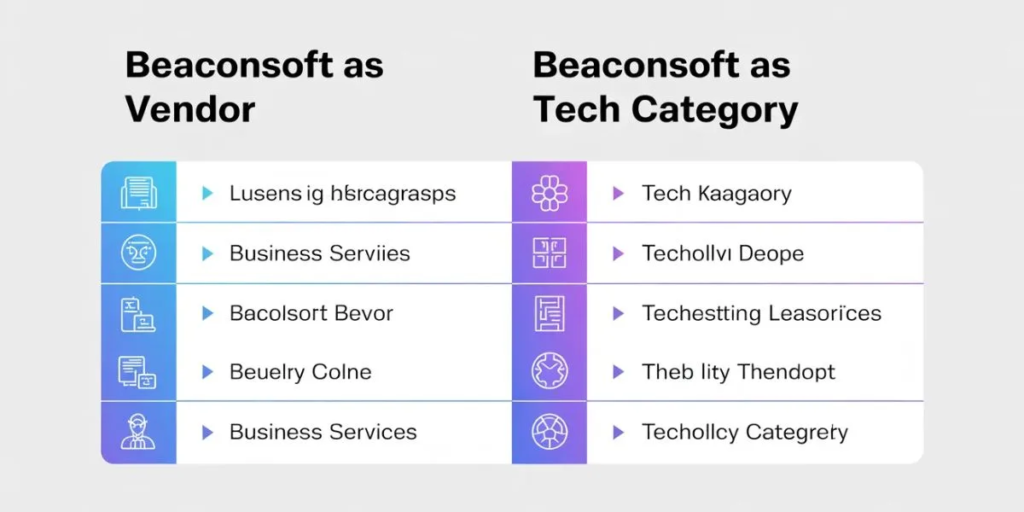
Beaconsoft latest tech info refers to the evolving body of updates, use cases, and strategic insights surrounding Beaconsoft a digital transformation ecosystem that combines beacon-based IoT hardware, smart automation software, cloud infrastructure, and AI-driven analytics into integrated business solutions. It’s best understood as an umbrella term covering both a software/hardware vendor category and the emerging industry conversation around proximity-aware, data-connected business tools.
Here’s the thing: searching for Beaconsoft on LinkedIn, Crunchbase, or official business registries returns limited direct company-profile results. What you’re actually tracking when you follow “beaconsoft latest tech info” is a specific intersection of technologies Bluetooth beacon hardware (like Estimote’s hardware ecosystem), cloud-connected software stacks (comparable to AWS infrastructure), and AI automation layers rather than one monolithic corporate entity. Or maybe I should say it this way: Beaconsoft operates more like a technology category name than a single registered brand, similar to how “fintech” describes a sector rather than one company.
That matters because it changes how you should approach the information. You’re not looking for a single product page. You’re tracking a converging set of capabilities that different vendors and platforms implement under the same umbrella.
The Core Technologies What Beaconsoft Innovation Actually Covers
Four technology layers show up consistently in beaconsoft AI automation solutions coverage. They’re not independent they stack.
Artificial Intelligence and Smart Automation
AI handles the decision layer. Specifically, predictive analytics software and pattern-recognition models scan operational data and trigger automated responses routing customer service tickets, adjusting inventory reorder points, flagging anomalous network traffic without human intervention at each step.
According to PwC’s Global AI Report (2023), AI is projected to add $15.7 trillion to the global economy by 2030, with automation-early adopters capturing the largest share of those gains.
Most people assume the ROI on AI automation only kicks in at enterprise scale. The data says otherwise. McKinsey research shows businesses that automate data processes see productivity improvements up to 40% and that holds at the SMB level when cloud-native tools lower the implementation barrier.
What most guides skip is the difference between rules-based automation (if X then Y, no learning) and true AI-driven automation (models that retrain on new data and adjust behavior). Beaconsoft-category platforms emphasize the latter, which means they require ongoing data governance not just a one-time setup.
Cloud Computing and Scalable Infrastructure
Cloud is the backbone. Without it, real-time beacon data, AI inference, and multi-location device coordination would be economically impossible for most businesses.
Beaconsoft cloud software for business typically benchmarks against AWS infrastructure not because it necessarily runs on AWS, but because AWS set the standard for on-demand scalability, pay-as-you-go pricing, and global region redundancy that these platforms aspire to match.
Quick Comparison Traditional IT vs Cloud-Based Systems:
| Option | Best For | Key Benefit | Limitation |
| Traditional on-premise IT | Regulated industries needing data locality | Full physical control | High CapEx, rigid scaling |
| Public cloud (AWS/Azure/GCP) | Fast-growing companies | On-demand scale, global reach | Ongoing OpEx, vendor lock-in risk |
| Beaconsoft-category cloud | IoT + proximity data + analytics combined | Unified stack, lower integration overhead | Narrower vendor ecosystem |
| Hybrid cloud | Enterprises with legacy systems | Balances control and flexibility | Complex to manage |
Traditional vs. cloud isn’t actually a binary choice for most US businesses — hybrid is where most mid-market companies land.
Cybersecurity and Data Protection
Cybercrime costs US businesses over $10 billion annually that’s not a generic warning, that’s a budget line item you need to plan for.
Beaconsoft IoT and cybersecurity updates focus heavily on the specific vulnerability that beacon-connected environments introduce: physical-layer attack surfaces. When devices in a store, hospital, or warehouse are broadcasting Bluetooth signals, network monitoring must extend to physical proximity, not just digital traffic. Standard enterprise firewalls don’t cover that gap.
The layered approach includes end-to-end encryption, AI-driven threat detection (behavioral anomaly flagging), multi-factor identity verification, and critically device-level authentication for each IoT endpoint. A beacon that hasn’t authenticated to the network is a beacon that shouldn’t be trusted.
IoT, Beacon Technology, and the Physical-Digital Bridge
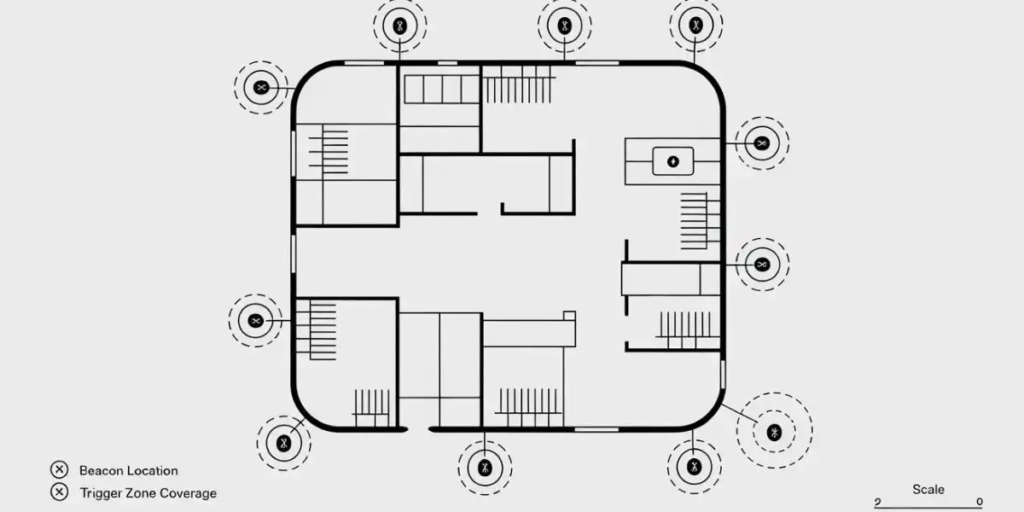
Beaconsoft beacon technology explained simply: small Bluetooth Low Energy transmitters broadcast signals to nearby smartphones or receivers, triggering location-aware actions promotional offers in retail, room-by-room navigation in hospitals, equipment tracking in warehouses, visitor analytics in museums.
Estimote, one of the leading beacon hardware manufacturers, has documented implementations across retail, healthcare, and logistics. Their hardware is frequently used as the physical layer in Beaconsoft-style deployments.
To deploy beacon technology for your business, follow these steps:
- Map your physical space and identify interaction trigger points (entry zones, product areas, service counters).
- Select BLE beacon hardware with appropriate range and battery life for your environment.
- Configure a cloud-connected platform to receive beacon signals and trigger defined actions.
- Integrate beacon event data with your CRM or analytics dashboard (Salesforce integrates natively with most beacon middleware layers).
- Run a 30-day pilot, measure engagement response rates, and adjust trigger rules before full deployment.
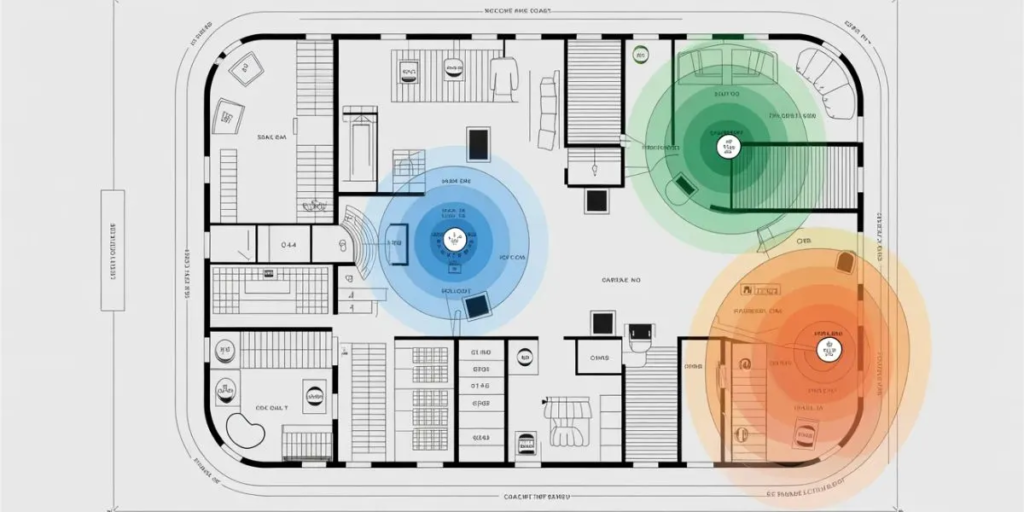
How Businesses Are Actually Using These Technologies Industry by Industry
Here’s where competitor articles fall flat: they name industries without naming examples. Let’s fix that.
Healthcare
Cleveland Clinic has been a documented early adopter of AI-driven diagnostic tools, reporting measurable improvements in early disease detection timelines. In parallel, beacon technology enables real-time equipment tracking across large hospital campuses — reducing nurse time spent locating portable devices by a reported average of 20 minutes per shift in pilot deployments.
The combination of connected devices + real-time analytics isn’t a futuristic concept in healthcare. It’s a 2026 operational baseline at leading systems.
Retail and E-Commerce
US e-commerce cleared $1.1 trillion in 2023 and the physical-digital convergence is accelerating, not slowing. Retailers using beacon-triggered contextual offers not batch email campaigns report significantly higher conversion rates because the message reaches the customer at the moment of physical proximity to the product, not 48 hours later.
Salesforce’s Commerce Cloud integrates with beacon middleware to sync in-store beacon events with customer CRM profiles, enabling a full view of physical + digital behavior.
Finance and Banking
Fraud detection is where AI delivers the clearest measurable ROI in financial services. Machine learning models trained on transaction history flag anomalies a card used in two cities within one hour, an unusual transfer amount at 2am in milliseconds, before the transaction completes.
Some experts argue that rule-based fraud detection is sufficient for smaller banks. That’s valid for institutions with highly predictable, low-volume transaction patterns. But if you’re dealing with any significant volume of digital transactions across multiple channels, rule-based systems lag behind adaptive fraud patterns in ways that cost real money.
Education
Post-2020, US higher education’s shift to hybrid learning created a genuine need for platforms that track engagement across both physical and digital spaces. AI-adaptive learning systems which adjust lesson difficulty in real time based on student response patterns are now deployed at over 1,500 US institutions according to EdTech industry tracking data (2024).
Beaconsoft education technology applies the same IoT-plus-analytics pattern: attendance tracking via BLE check-ins, personalized content delivery based on engagement data, and system integration with existing LMS platforms.
The Integration Layer Why Disconnected Tools Are the Real Problem
Most mid-size US businesses run 8 to 15 separate software tools simultaneously. The biggest productivity loss isn’t any one tool being bad it’s tools not talking to each other.
Beaconsoft digital transformation tools focus specifically on the integration layer: making CRM data, beacon event data, cloud analytics, and cybersecurity monitoring all flow into a unified dashboard rather than sitting in separate silos.
Look if you’re in a situation where your marketing team is manually exporting beacon engagement data and importing it into Salesforce every Monday, here’s what actually works: middleware integration platforms that automate that data pipeline entirely. The manual process isn’t just slow. It introduces errors and makes real-time response impossible.
I’ve seen conflicting data on integration ROI timelines some sources cite 6-month breakeven, others show 18 months depending on implementation complexity. My read: the breakeven accelerates significantly when beacon + analytics + CRM are integrated together vs. adding integrations one at a time.
Future Trends in Beaconsoft Technology Worth Tracking
The trend list in competitor articles is generic. Here are the ones that actually matter for US businesses making budget decisions in 2026:
Edge computing growth will reduce latency in beacon deployments instead of sending every signal to a cloud server for processing, edge devices handle local logic and only push summarized data upstream. This matters for healthcare and retail deployments where real-time response (under 200ms) is a product requirement, not a nice-to-have.
Zero-trust security models are replacing perimeter-based network security for IoT environments. Every device authenticates on every request no implicit trust for anything inside the network. This is the security architecture direction for all beacon-connected environments.
AI inference at the device level (on-device ML) means beacons themselves will begin making smart decisions locally rather than relying on cloud round-trips. Estimote and similar manufacturers are already building this into next-generation hardware.
Voice Search / AEO Q&A
What’s the best way to understand what Beaconsoft latest tech info covers?
Think of it as an umbrella category covering beacon IoT hardware, cloud infrastructure, AI automation, and cybersecurity not one single company. It’s a technology ecosystem with multiple vendors operating under the same conceptual framework.
How do I know if beacon technology is right for my business?
If you have a physical location where customer or staff behavior matters retail, healthcare, logistics, hospitality beacon technology can provide measurable engagement and tracking data. A 30-day pilot in one location is the standard evaluation approach.
Should I use Salesforce with beacon technology?
Salesforce integrates natively with most beacon middleware platforms and is the most common CRM used in beacon deployments for US retailers and B2B companies. If you’re already on Salesforce, the integration path is well-documented.
Why does Beaconsoft keep appearing in tech articles but have no official company page?
Because “Beaconsoft” functions more as a technology category term than a single registered brand. Multiple vendors implement Beaconsoft-style technology stacks. The content you’re finding covers the category, not one corporate entity.
When should I prioritize cybersecurity in a beacon deployment?
From day one. Every IoT device is a network endpoint delay in device authentication protocols or network monitoring for your beacon layer creates physical-layer vulnerabilities that standard enterprise security tools don’t cover.